
Guides
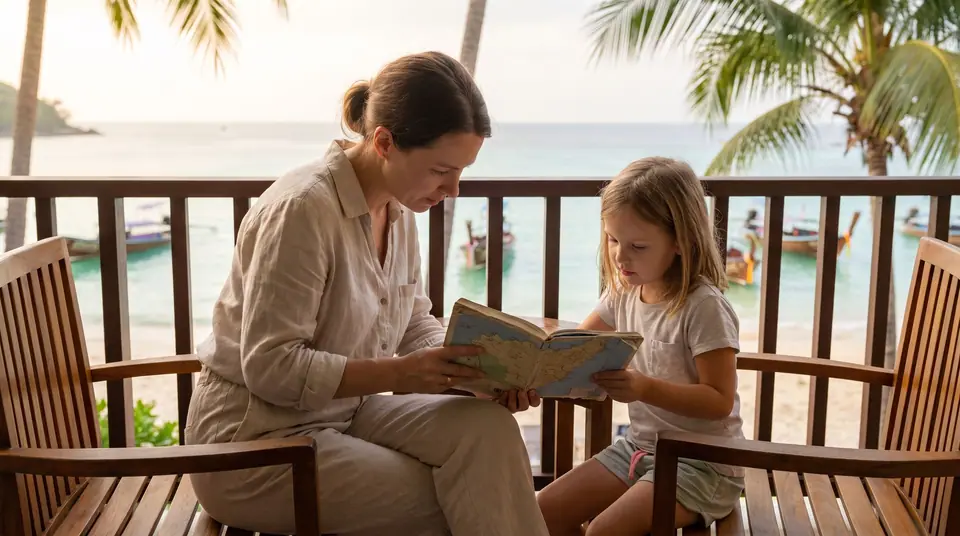
Family travel guides for Thailand
Five practical guides for parents: the child car seat law, traveling with a baby, the best months by region, itineraries with real drive times, and health and safety. Every rule, fee and date is checked against an official or first-hand source and dated.
Updated · Facts checked in September 2026
The guides
Each guide opens with a short answer and a key facts box, and ends with its sources.
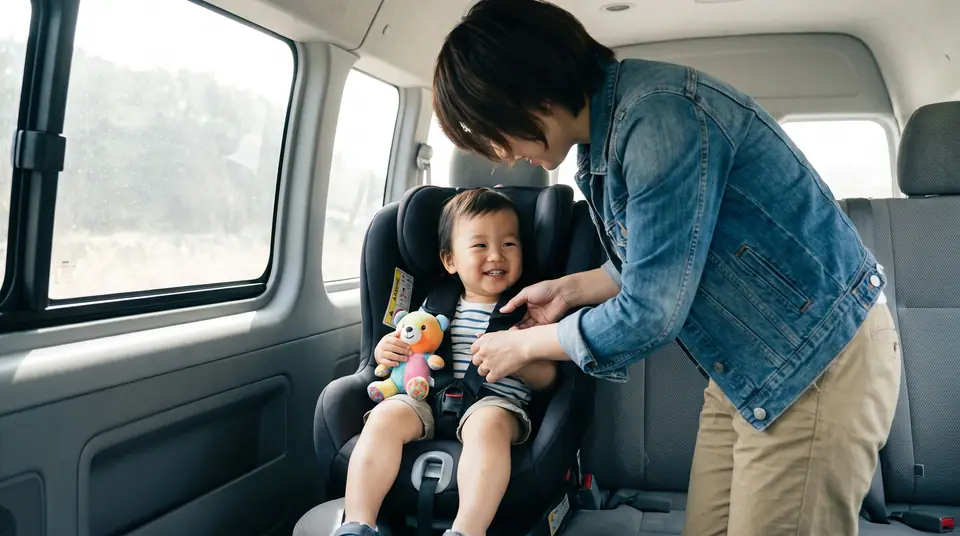
Thailand's car seat law
Who the rule covers, when it started, the 2,000-baht fine, why taxis are exempt, what is still unclear about ride-hailing, and how to use a seat without bringing one.
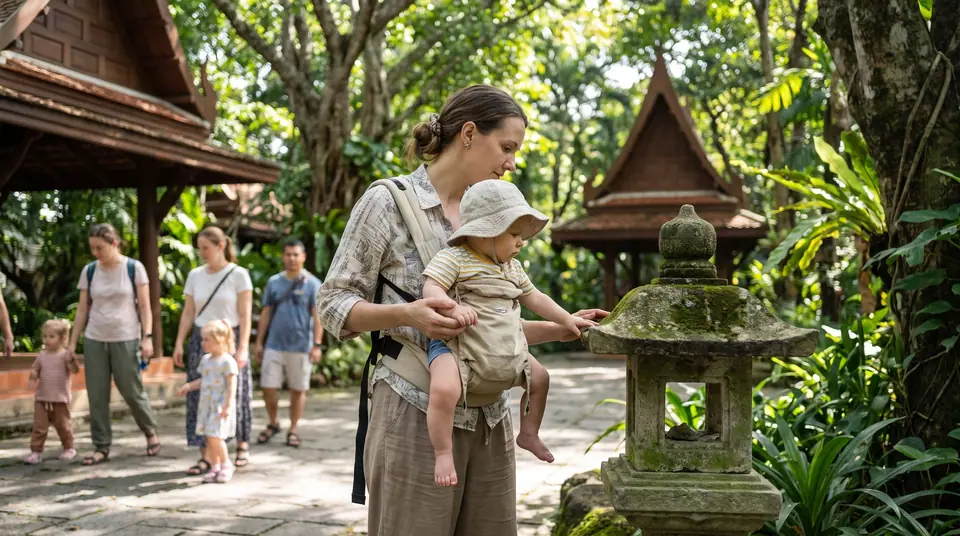
Thailand with a baby
Arrival with a car seat, formula and diapers, heat, mosquitoes and dengue, safe water, cots, strollers versus carriers, and what to do if your baby gets sick.
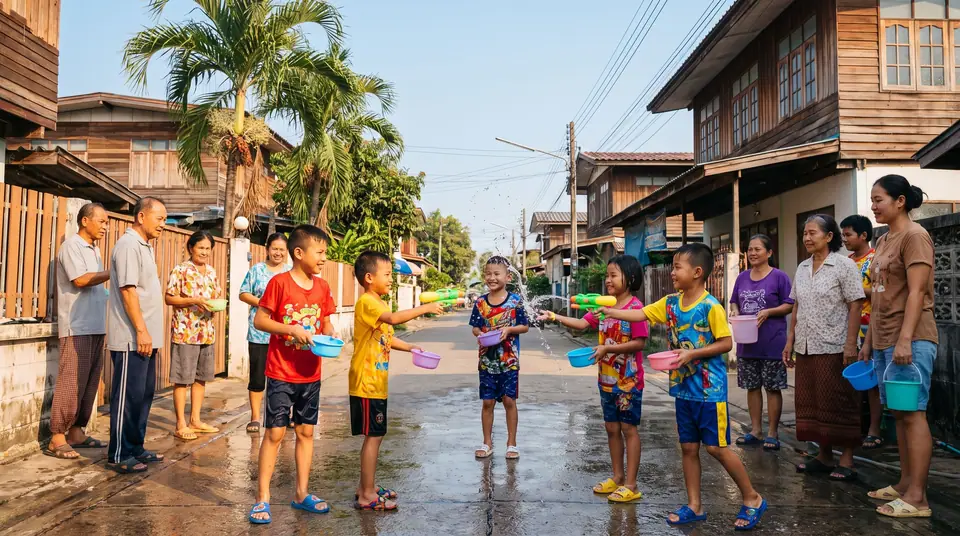
Best time to visit with kids
The three seasons, how the Gulf and Andaman coasts differ, a month-by-month table, school holidays, and Songkran and Loy Krathong dates for 2026 and 2027.
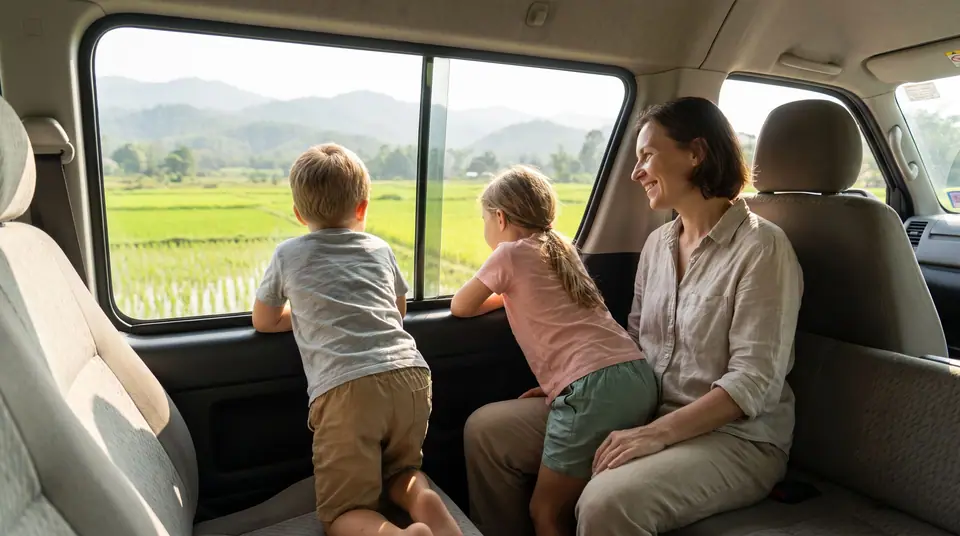
Family itineraries
Seven days of Bangkok and the beach, ten days of rivers and wildlife, two weeks with Chiang Mai and Krabi, and a nine-day Isan loop, each with drive times and rest days.

Health and safety
Heat, water and food, dengue, swimming and boats, road safety, dogs, monkeys and rabies, hospitals, insurance, vaccines and emergency numbers.
Numbers to remember
Thailand with kids in six numbers
Before you fly: a family checklist
- Passports valid for at least 6 months on entry, one for every child.
- A Thailand Digital Arrival Card for each traveler, filed on tdac.immigration.go.th within the 3 days before arrival; look-alike sites charge for the free form.
- The airport transfer booked with a child seat, confirmed in writing, with each child's age, weight and height.
- Travel insurance that names every child and covers hospital care and evacuation.
- Routine vaccines checked, plus hepatitis A (from age 1) and typhoid as the CDC advises; ask about Japanese encephalitis and rabies for long or rural trips.
- Enough of your baby's usual formula, and a mosquito repellent your pediatrician approves.
- A plan for cash: Thai ATMs charge foreign cards 250 baht per withdrawal on Visa, UnionPay and JCB and 350 baht on Mastercard at the banks we checked, so take out larger amounts less often.
Which guide should you read first?
Start from the situation that worries you most. The table points to the guide, and to the section, that answers it.
| Your situation | Read first | Then |
|---|---|---|
| Landing in Bangkok with a baby or toddler | Thailand with a baby | Taxis with car seats for the airport ride |
| Planning to rent a car and drive | Car seat law: you are the driver responsible | Road safety |
| Dates fixed by school holidays | Best time: school holidays | Destinations by age |
| One week, first trip | 7-day itinerary | Hua Hin and Ayutthaya |
| Children who love animals | Khao Yai and Korat | Dogs, monkeys and rabies |
| Traveling in the rainy season | Rainy season pros and cons | Dengue protection |
| Older kids who want something different | The Isan loop | Sukhothai by bike |
How are these guides checked?
Every rule, fee, date and number in the guides comes from a named source: Thai government bodies such as the Department of National Parks, the Thai Meteorological Department and the Immigration Bureau; the CDC and the World Health Organization for health; and, for the transfer network, the operator's published terms. Each guide lists its sources at the end with the date we checked them, and says "as of September 2026" where a rule could change. When sources disagree, or we could not confirm something, the guide says so rather than guessing.
Things change: park fees, visa rules and festival dates are revised from time to time. Check the official page linked in a guide before you rely on a fee or a date, and read how we choose places and check facts.
Frequently asked questions
What do I need to know before traveling to Thailand with kids?
Four practical points: book transfers with a child seat for children aged 6 or under, file a Thailand Digital Arrival Card for every family member, plan around the heat and the rainy season, and use bottled or filtered water. The guides above cover each in detail.
How long can we stay in Thailand without a visa?
Since 15 September 2026, passport holders of 60 countries and territories, including the US, UK, Canada, Australia and EU states, can stay up to 30 days visa-free for tourism. Your passport must be valid for at least 6 months on entry.
Is there a tourist entry fee for Thailand?
Not yet. A 450-baht fee per foreign visitor was proposed in August 2026 and is aimed at early 2027, with children under 2 among the proposed exemptions, but it still needs Cabinet approval and publication. Nothing is being collected as of September 2026.
Do Thai hotels and restaurants welcome children?
Generally yes; children are welcome almost everywhere, from temples to night markets. What varies is equipment: ask hotels for cots in writing, and do not count on high chairs or child seats in taxis.
How often are these guides updated?
They were last checked in full on 27 September 2026, and the date appears under each title. When a rule changes, such as visa lengths or fees, we update the guide and its date.
Sources for the facts on this page
- Amended Land Traffic Act s.123 — The Standard (Thai), checked 27 Sep 2026
- Thailand Digital Arrival Card FAQ — Immigration Bureau, checked 27 Sep 2026
- New 30-day and 15-day visa exemption rules from 15 September — TAT Newsroom, 1 Sep 2026, checked 27 Sep 2026
- Proposed 450-baht tourist fee towards early 2027 — The Nation, 15 Aug 2026, checked 27 Sep 2026
- Card and electronic service fees (effective 1 Sep 2026) — Siam Commercial Bank (Thai PDF), checked 27 Sep 2026
- Travelers' Health: Thailand — CDC, checked 27 Sep 2026
- National park entrance fees by tier — Department of National Parks (Thai), checked 27 Sep 2026
- Grand Palace FAQ — The Grand Palace, checked 27 Sep 2026